

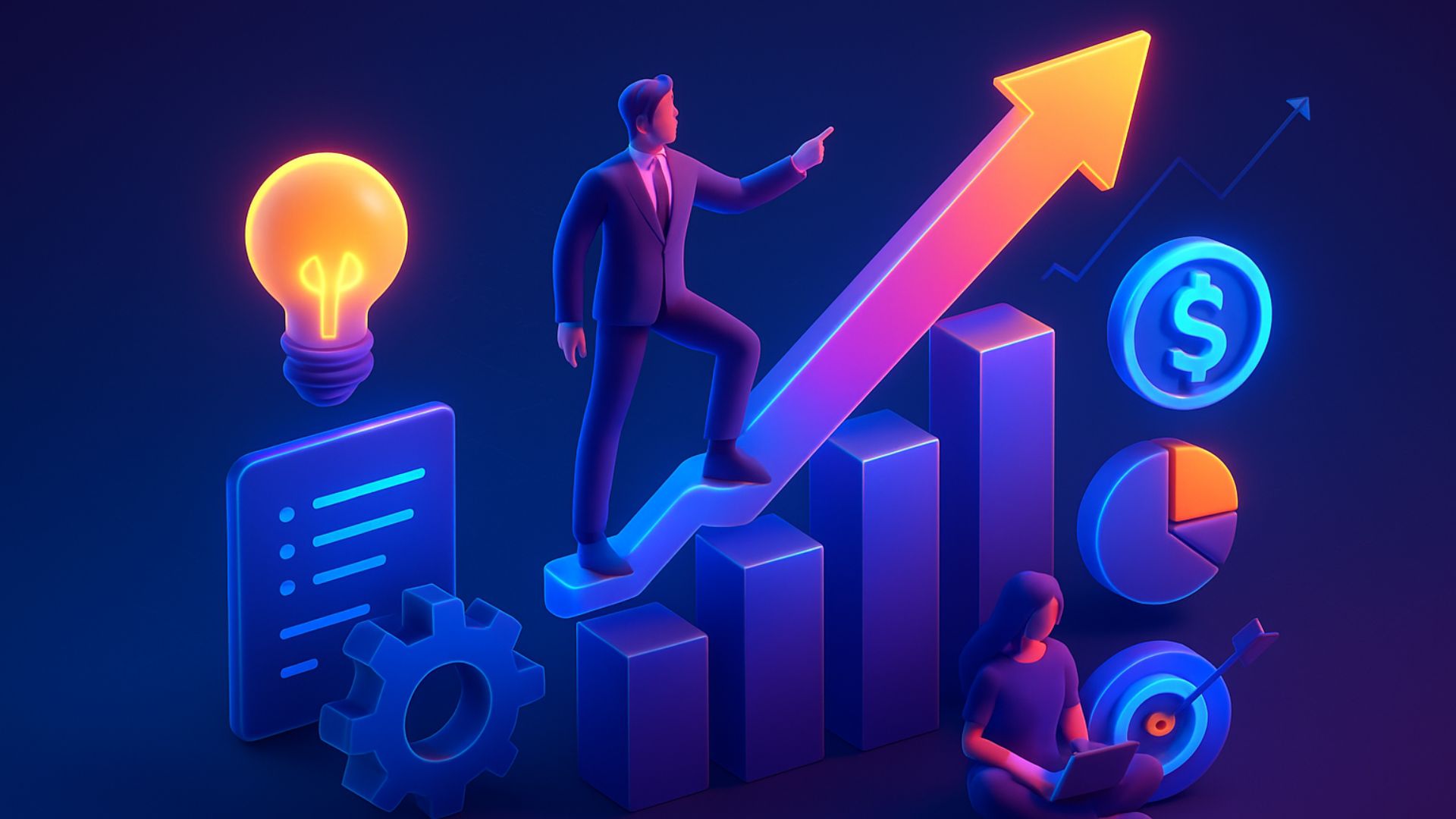

If you’re building a business in 2026, you’re playing a very different game from the founders who launched in 2010. Back then, you could win with a great product, some decent SEO, and a Facebook page.
Today? You’re competing in a world where:
- Customer expectations are higher.
- Attention spans are shorter.
- Competition is brutal.
- And technology changes every six months.
So the question becomes:
How do modern companies scale fast without burning cash, losing customers, or killing their brand?
After analyzing hundreds of fast-growing companies — from SaaS startups to local service brands — a clear pattern emerges. Scaling isn’t luck.
It’s a blueprint.
A blueprint that any founder, marketer, or operator can follow.
Let’s break it down.
Key Takeaways
- Fast growth isn’t luck — it’s a repeatable system. The companies scaling today are following clear frameworks, not random hacks.
- Clarity beats everything. When you know exactly who you serve and why you’re different, your marketing becomes 10x more effective.
- Friction kills growth. The easier you make it for customers to buy, the faster your business scales.
- Content is a growth engine, not a blog strategy. Modern brands grow by owning attention, not chasing trends.
- Trust converts faster than funnels. Case studies, stories, reviews, and transparency are your real revenue drivers.
- Speed wins — but smart speed wins bigger. Launch fast, iterate fast, and double down on what moves the needle.
- Customer experience is the new marketing. If customers don’t love you, nothing else matters.
- Growth compounds when systems are aligned. Awareness → Acquisition → Conversion → Retention.
- Build what competitors can’t copy. Your brand story, your experience, and your execution discipline are your real moat.
#1. Start With the Only Thing That Scales: Clarity
Most companies fail not because they lack ambition, but because they lack clarity.
Clarity about:
- What they do
- Who they serve
- Why customers should trust them
- What makes them different
When you don’t have this clarity, everything becomes harder — marketing, sales, branding, even hiring.
The fastest-growing companies obsess over clarity before anything else. They know exactly:
- Their target segment
- Their problem-solution fit
- Their category
- Their competitive advantage (real, not wishful thinking)
Clarity is the foundation. Growth is the building.
#2. Simplify the Path to Purchase
Here’s something most founders don’t want to hear:
Your customers don’t care about your product.
They care about how easy it is to get what they want.
Modern companies scale fast because they eliminate friction.
Think about Amazon.
They didn’t win because they sold books. They won because buying books became one click.
Your job is to create your own version of “one click.”
Ask yourself:
- How many steps does it take to convert a visitor into a customer?
- Are you offering too many choices?
- Is your pricing confusing?
- Are you asking for unnecessary details?
Every extra step kills conversions. Every simplification boosts growth.
#3. Make Content a Business Engine, Not a Checkbox
Most companies publish content.
Very few turn content into an unfair advantage.
Here’s the truth:
Companies that scale fast build content-driven ecosystems.
They don’t write blog posts to look active.
They write to dominate intent, build trust, and stay in the customer’s mind for months.
Here’s how they approach content:
- Create content pillars that support the brand story
- Build topic clusters that help Google understand expertise
- Leverage short-form content to drive awareness
- Use long-form content to build authority
- Repurpose aggressively
- Add human stories, real examples, and original insights
This is how brands like HubSpot, Shopify, and Notion achieved compounding visibility.
Your content should not entertain Google.
It should educate, convert, and retain humans.
#4. Create a Growth System, Not Random Hacks
Most businesses chase growth the wrong way.
They try a trending reel. They run a few ads. They copy a competitor’s funnel.
And when nothing works, they assume the market is too crowded — or worse, that their product isn’t good enough.
But here’s the truth:
Fast-growing companies don’t scale by chasing trends. They scale by building systems.
Not one-off tactics.
Not lucky spikes.
Not “pray this goes viral” marketing.
They build growth systems — predictable processes that bring customers in, convert them, and keep them coming back with increasing loyalty.
And every strong growth system has four core pillars:
- Awareness Engine
- Acquisition Machine
- Conversion Architecture
- Retention Framework
Awareness Engine — The Fuel That Keeps You Visible
The first battle is simple:
People can’t buy from you if they don’t know you exist.
Modern brands don’t depend on a single channel. They diversify visibility with:
- SEO to capture long-term, high-intent traffic
- Short-form videos to spark discovery and build personality
- Partnerships and collaborations to tap into already-engaged audiences
- Thought leadership on LinkedIn, podcasts, or blogs to build authority
The best companies treat awareness like oxygen — it must flow 24/7.
They’re not guessing. They’re consistently showing up where their customers already are.
Acquisition Machine — Turning Attention Into Action
Awareness means nothing if it doesn’t convert into traffic, leads, and inquiries.
This is where your acquisition machine comes in:
- Laser-focused landing pages that speak directly to the user’s intent
- Clear, distraction-free funnels that guide visitors step-by-step
- Strong CTAs that tell people exactly what to do next
- Lead magnets that collect emails before people disappear
Top-performing companies obsess over the first step a user takes.
Because once they enter your world, you can nurture them.
Without a strong acquisition machine, your awareness efforts leak value like a broken bucket.
Conversion Architecture — The System That Turns “Maybe” Into “Yes”
Most companies think conversions happen by chance.
High-growth companies know conversions happen by design.
They build what I call conversion architecture:
- Offer clarity — people should instantly understand what you sell
- Social proof everywhere — testimonials, reviews, logos, case studies
- Proof of results — demos, screenshots, timelines
- Risk reducers — guarantees, transparent pricing, onboarding clarity
- Fast-response workflows — speed in follow-ups dramatically improves closing rate
Conversion architecture is not a landing page.
It’s the entire ecosystem that removes doubt and builds trust.
When people believe you can deliver, conversions happen naturally.
Retention Framework — Where Real Profit Comes From
Here’s something most founders overlook:
Acquiring a customer is expensive. Keeping a customer is profitable.
Retention is where modern companies win big.
A retention framework includes:
- Email automation that educates, follows up, and re-engages
- Personalized communication based on behavior and history
- Loyalty triggers — early access, exclusive perks, VIP treatment
- Thoughtful upsells and cross-sells that feel helpful, not pushy
- A great post-purchase experience that builds long-term trust
When retention is strong, your growth becomes exponential because:
Acquisition + Conversion + Retention = Compounding revenue.
This is why companies with strong retention systems scale faster and with less cost than competitors who rely only on new customer acquisition.
#5. Invest in Customer Experience — It’s the New Marketing
You can’t scale in 2025 if customers don’t love you.
Let that sink in.
We live in an age where:
- Reviews decide your reputation
- Social media amplifies every experience
- Customers expect instant replies
- A single viral complaint can break trust
Companies that scale invest heavily in customer experience.
They build:
- Faster support systems
- Personalized onboarding
- Clear documentation
- Transparent communication
- Delightful post-purchase moments
When your customers talk about you, you don’t need ads.
Your customers become your marketing channel.
#6. Build Trust Before You Build Funnels
Here’s a growth truth no one talks about:
Customers buy only from brands they trust faster than others.
Modern companies scale fast because they make trust a priority, not a logo.
Trust comes from:
- Case studies
- Social proof
- Transparent pricing
- Founder visibility
- Professional branding
- Strong positioning
Trust accelerates conversions.
Trust reduces hesitation.
Trust moves customers from “Let me think about it” to “Where do I pay?”
#7. Use Data to Scale, Not to Look Smart
Data is not about dashboards.
Data is about decisions.
Fast-growing companies use data to answer:
- What channels bring the highest-quality leads?
- What pages convert the best?
- What offers attract the highest lifetime value?
- What content drives the deepest engagement?
They don’t guess.
They measure → test → improve.
This is how they move faster than their competitors.
#8. Build a Competitive Moat — Something Others Can’t Copy
Anyone can copy your website.
Anyone can copy your design.
Anyone can copy your ads.
But they can’t copy:
- Your brand story
- Your customer experience
- Your product philosophy
- Your ecosystem
- Your community
- Your execution discipline
Modern companies scale fast because they build moats.
Not complicated ones.
Real ones.
And that’s what protects them when the market gets crowded.
#9. Speed Matters — But Smart Speed Wins
Speed used to be optional.
Now it’s survival.
But the companies that scale fastest don’t just move quickly — they move intentionally.
They:
- Ship MVPs fast
- Collect feedback fast
- Iterate fast
- Cut what’s not working fast
- Double down on winners fast
They don’t chase perfection.
They chase progress.
And in a world where attention shifts every 48 hours, progress is the ultimate advantage.
The Final Truth: Scaling Is Not an Accident
Scaling isn’t magic.
Scaling isn’t about luck.
Scaling isn’t about going viral.
Scaling is a blueprint — a repeatable system.
Modern companies grow fast because they:
- Understand their audience
- Communicate clearly
- Build trust
- Create systems
- Measure everything
- Improve constantly
- Obsess over customer experience
- And move faster than their competition
If you follow the same principles, your business can scale too — sustainably, profitably, and with a strong brand.
Because growth isn’t about doing more.
Growth is about doing the right things — repeatedly.
Frequently Asked Questions
Reference
- McKinsey & Company — “Digital transformation: Improving the odds of success” by Jacques Bughin, Jonathan Deakin & Barbara O’Beirne. Published October 22 2019.
- McKinsey — “How top-performing companies approach digital transformation” by Kate Smaje & Rodney Zemmel. Published March 23 2024.
- HubSpot — “The 2025 State of Marketing & Trends Report: Data from 1,700+ Global Marketers” by Maxwell Iskiev. Published June 26 2024.
- HubSpot — “2024 State of Marketing Report – by HubSpot” (PDF slide deck). Published July 30 2024 (as referenced).
- Gartner — “Scaling AI: Strategies for AI-Steady and AI-Accelerated Organizations” by Mary Mesaglio & Hung LeHong. Published November 6 2025.
